
Do Fillers Ruin Your Face? What You Need to Know
Dermal fillers Do fillers ruin your face? An honest look. The straight answer: only with overfilling or poor technique. Here’s what really goes wrong, how rare it is, and how to make sure it doesn’t happen to you. AR Medically…

Do fillers ruin your face? An honest look.
The straight answer: only with overfilling or poor technique. Here’s what really goes wrong, how rare it is, and how to make sure it doesn’t happen to you.
If you have spent any time on TikTok, you have probably wondered: do fillers ruin your face? It is a fair worry, and one worth a straight answer before you book. So here is the honest version — what can actually go wrong, how often it really happens, and how to make sure it doesn’t happen to you.
The honest answer: can fillers ruin your face?
Done well, dermal fillers will not ruin your face. They add volume, soften lines, and restore contour, and because they are made from hyaluronic acid, the results are temporary and reversible. The face that gets “ruined” almost always comes down to one of two things: too much filler, or poor technique. In other words, it is not fillers themselves that cause problems — it is how they are used. Choose a skilled, conservative injector and the risk drops dramatically.
Is filler migration as common as TikTok makes it look?
Short answer: no. Filler migration — when product moves from where it was injected — is far less common than social media suggests, and most experts consider it uncommon when treatment is done well. With tens of millions of hyaluronic acid filler treatments performed worldwide, the vast majority go smoothly.
It also helps to know that a lot of what gets labeled “migration” online is actually something else:
- Normal settling. In the first days to weeks, filler integrates and softens. That is expected, not migration.
- Overfilling. Too much product in one area has nowhere to go but outward, which can look like spreading.
- Wrong product for the area. A soft filler placed in a structural zone can behave badly. That is a technique choice, not the filler failing.
True migration does happen, most often in high-movement areas like the lips and under-eyes, but it is usually tied to overfilling, injecting too superficially, or an inexperienced injector — all of which are preventable.
What actually goes wrong (and how to avoid it)
Overfilling and “pillow face”
This is the big one. Using filler to chase every perceived flaw leads to a puffy, over-inflated look where your natural contours disappear. The fix is prevention: a conservative injector who uses the right amount in the right place, and who is willing to tell you when the answer is “less,” not “more.”
Filler migration
As above, migration is uncommon with good technique. Avoiding it comes down to appropriate volume, the correct product for each area, precise placement in the right tissue layer, and good aftercare (no rubbing or pressing in the first days).
Filler fatigue
Repeated overfilling over many years can stretch the skin and, in some cases, create a sense of needing filler to maintain your look. This is not an argument against filler — it is an argument for a thoughtful, conservative plan and an injector who paces your treatments rather than layering product every few months.
Rare but serious: vascular occlusion
Very rarely, filler can be injected into or press on a blood vessel and block blood flow, which can cause skin or, in extremely rare cases, vision problems. It is uncommon, and it is exactly why the training and anatomical knowledge of your injector matter so much. This is not a place to bargain-shop.
Can filler be undone?
Yes — and this is the reassurance most people do not realize they have. Hyaluronic acid fillers can be dissolved with an enzyme called hyaluronidase, which breaks the filler down so your body reabsorbs it, often within days. So if you are ever unhappy with a result, or in the rare case of migration or overcorrection, it can be corrected. Filler is not a permanent decision.
What well-done filler looks like
The goal of good filler is enhancement, not transformation. It should look like you on a well-rested day, not like you had “work done.” That comes from a conservative philosophy: start with a small amount, assess, and add later if you want to, rather than doing too much in one sitting. Everyone’s face is different, so your plan should be built around your features, your skin, and your goals — not a trend.
How to choose a safe injector
This is the single biggest factor in whether you love your results. Look for:
- A licensed, medically trained injector with deep knowledge of facial anatomy
- A conservative approach and a willingness to say “not yet” or “less”
- Real before-and-after photos of their actual patients
- Use of established, FDA-approved hyaluronic acid fillers, and precise technique.
- No pressure to add “just one more syringe”
What are dermal fillers, exactly?
Dermal fillers are gel-like injectable treatments, most often made from hyaluronic acid, a substance your body produces naturally. The two most popular HA filler families are Juvederm and Restylane, both FDA-approved and used across tens of millions of treatments worldwide. They restore lost volume, smooth wrinkles, and enhance facial contours, with results that appear right away and last several months to over a year depending on the product and area. Because they are temporary, your face gradually returns to its natural state as the filler dissolves. Popular treated areas include the cheeks, lips, and under-eyes.
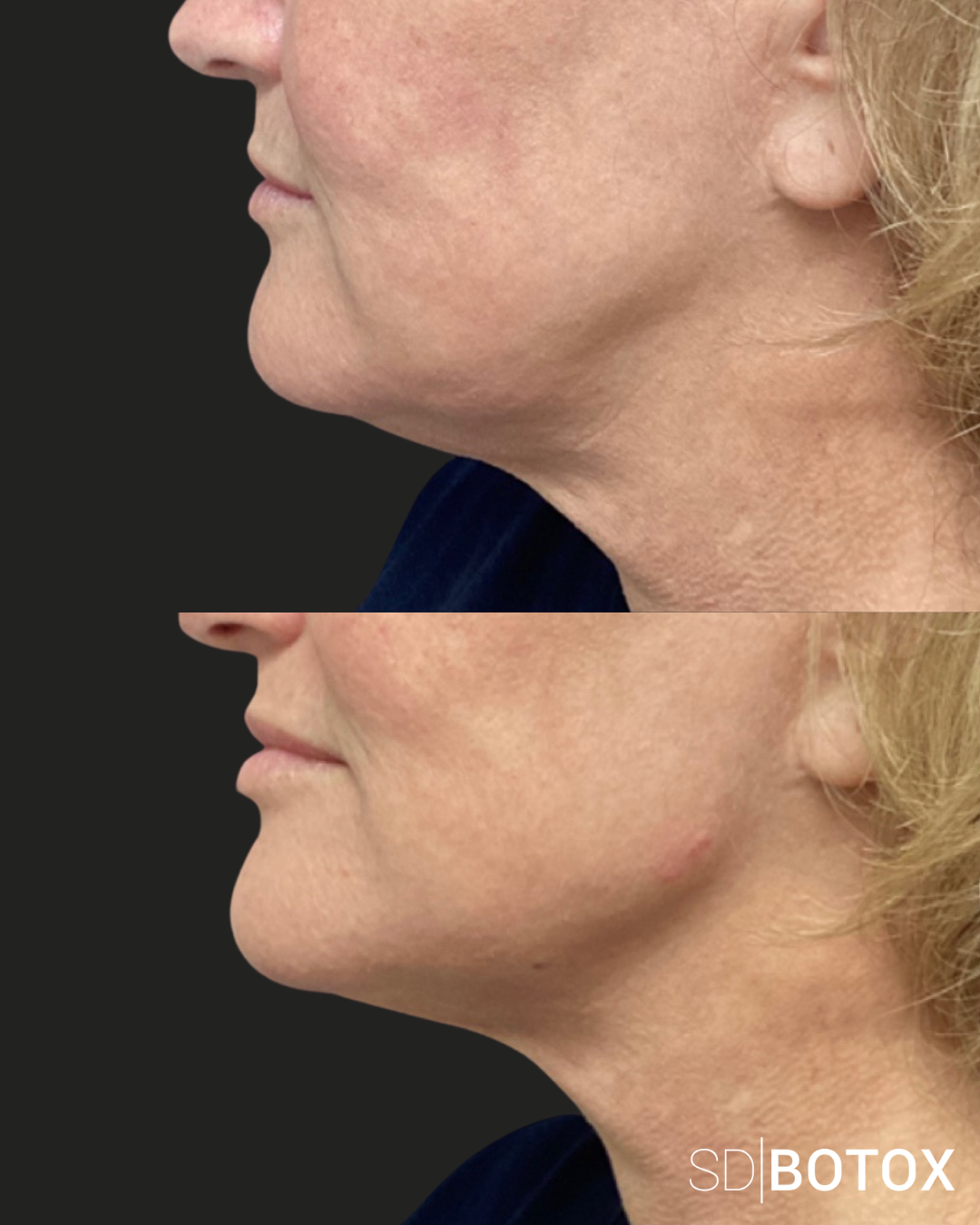
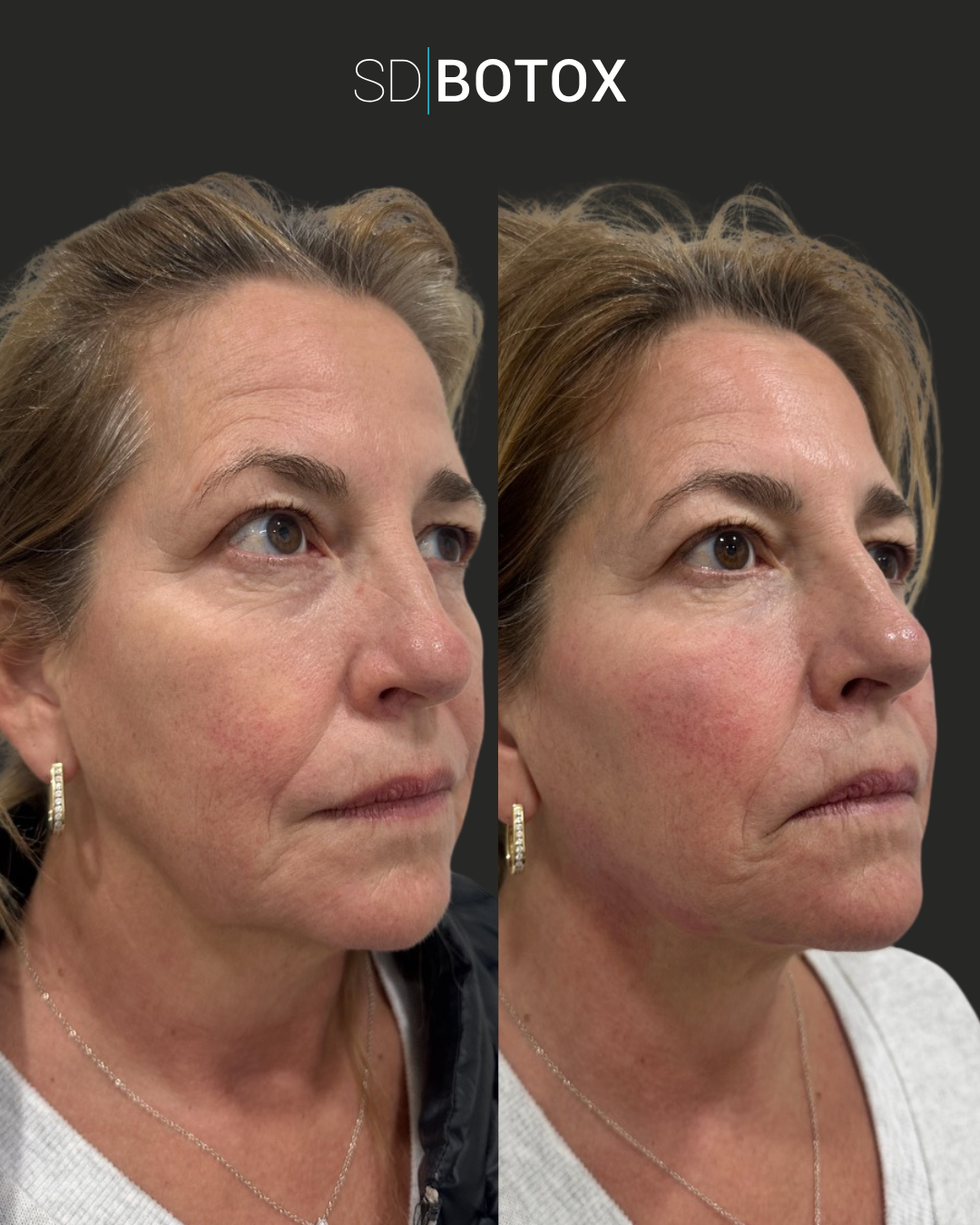
Why patients choose SDBotox
We are San Diego’s accessible expert med spa, which means you get injectors who lead with honesty and a conservative, anatomy-first approach. Our dermal filler team is trained to enhance your natural features, not overhaul them — and to tell you candidly when the best answer is to do less or wait. That philosophy is exactly how you avoid the outcomes people worry about.
This article is for general education and isn’t medical advice. Results vary from person to person, and a consultation is the only way to know what’s right for you.
Thinking about filler? Let’s do it right.
We’ll assess your features, talk through your goals, and build a conservative plan designed to look natural — never overdone.
New here? See our new patient filler special — $150 off dermal filler, or call 844-732-6869 to talk it through first.
Receive $150 off of dermal filler. Valid on a single 1 ml syringe of select fillers. Valid at SDBotox San Diego locations only. Cannot be combined with any other offers, new patient specials, promotions, or membership benefits. Valid while supply lasts. This offer must be mentioned at the time of check-out to redeem.
Do fillers ruin your face? FAQs
Do fillers ruin your face?
Not when done well. Problems like an overfilled look or migration almost always come from too much filler or poor technique, not from fillers themselves. A conservative, skilled injector keeps results natural, and hyaluronic acid filler is reversible.
Is filler migration common?
No. Migration is far less common than social media suggests and is usually tied to overfilling, superficial placement, or an inexperienced injector. Much of what looks like migration online is actually normal settling or overfilling.
Can filler be dissolved if I don’t like it?
Yes. Hyaluronic acid fillers can be dissolved with hyaluronidase, an enzyme that breaks the filler down so your body reabsorbs it, often within days. Filler is not a permanent decision.
Do fillers stretch or damage your skin over time?
Years of overfilling can stretch the skin, which is sometimes called filler fatigue. It is avoidable with a conservative plan and an injector who paces your treatments rather than continuously adding volume.
Are dermal fillers safe?
Generally yes, when performed by a trained, licensed injector using FDA-approved hyaluronic acid fillers. Serious complications are rare, and the biggest factor in your safety and results is the skill of your injector.
Not sure which treatment you need?
We'll assess your skin, talk through your goals, and recommend the treatment that fits.